
3D permutations: why 123, 112 and 111 have different numbers of arrangements
Three digits are not always six. When the digits of 123 are different, there are six distinct arrangements. Out of 112, only three; in 111, only one. Here it is easy to miscalculate if duplicate arrangements are considered new selections.
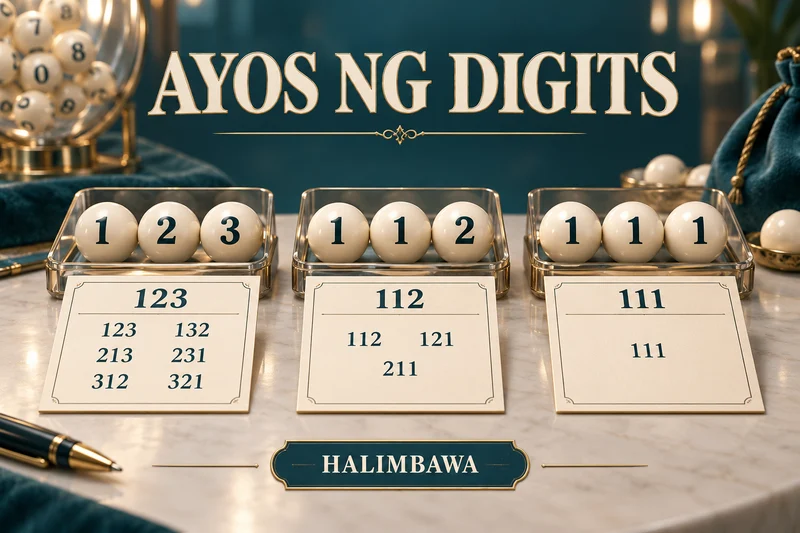
Everything is fine, no duplicates
| Fake digits | Distinct arrangements | Count |
|---|---|---|
| 123 | 123, 132, 213, 231, 312, 321 | 6 |
| 112 | 112, 121, 211 | 3 |
| 111 | 111 | 1 |
Where does the count come from?
The formula is 3! which is divided by the factorial of each repeated-digit count. So 123 → 6; 112 → 6/2 = 3; 111 → 6/6 = 1. Calculated the distinct strings; no special number is favored in this arithmetic.
The PCSO archive has named digit-game rows, but the permutation calculation is not an automatic prize rule. The actual straight or alternative selection method, accepted inputs and award must be read on applicable game manual.
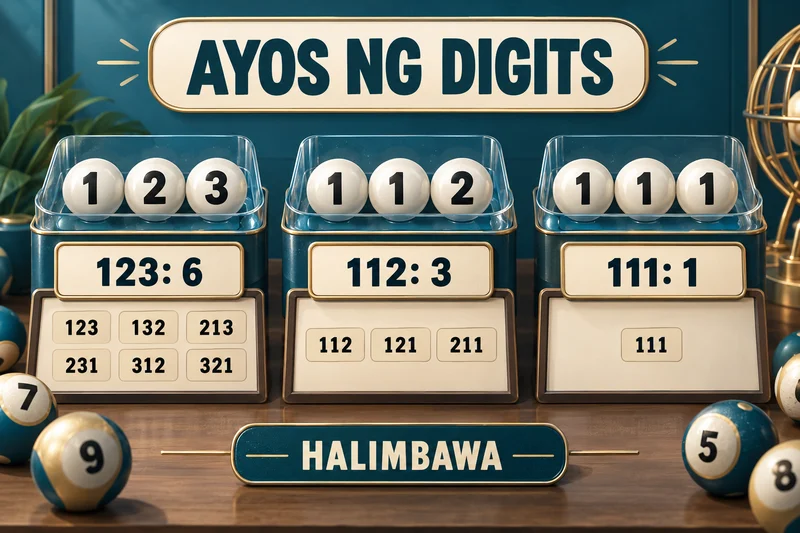
Count strings against cost
In the ledger fiction of one charge per distinct sequence, the more unique strings the more billed units. But the count of 6 or 3 cannot be used as a live ticket price multiplier if the actual product definition is different. First see exactly what the order pays for.
When there is a leading zero
0-1-1 has three orders: 011, 101 and 110. Hide 011 as text so as not to lose the first place. Converting it to numeric 11 breaks the three-digit comparison even if the permutation formula is correct.
Related reading
For other formats, read bingo and lottery hub. Naa library of guides the topics are more detailed; the playtime has a general overview of the site.
Methodology: documentary reading and own example or calculation. Sources checked 6 October 2026; no ticket purchased or draw played for the guide. Hypothetical models are not live results, predictions or claim approvals.
Related reading
3D digit sums: the same total does not mean the same result | playtime